
7 Ways to Observe Filipino-Chinese Culture this All Souls’ Day

Observing Chinoy Culture this All Souls Day
During All Souls’ Day, it is a time to remember our departed loved ones and a commemoration of our culture and respect for those who have passed. What makes this observance rich in meaning is the people who continue these practices by honoring their deceased loved ones.
It is within our hearts that we genuinely feel the need to remember those who have departed — a way to keep their memories alive while carrying on the customs of our ancestors.
As we continue to pay our respects, observing Chinoy culture during All Souls’ Day will always be upheld with honor. So, to uphold this meaningful tradition, here are some things you can do to help preserve our cultural heritage.
1. Visiting a Chinese Cemetery
For most Chinoys, visiting a Chinese cemetery is a shared experience during November to commemorate All Souls’ Day. When you visit a Chinese cemetery, it’s common to see mausoleums with intricate carvings where people pay their respects. There are also sections where graves are decorated with colored paper, along with food offerings for the departed souls.
One example is the Manila Chinese Cemetery in Santa Cruz, Manila. Surely, many Chinoys have ancestors who visit here to practice Chinoy traditions for this special event. This event offers them a glimpse into a unique culture, where heritage plays a big part in paying respect to the departed.
As the younger generation participates in this meaningful day, the legacy of our heritage will always be remembered.
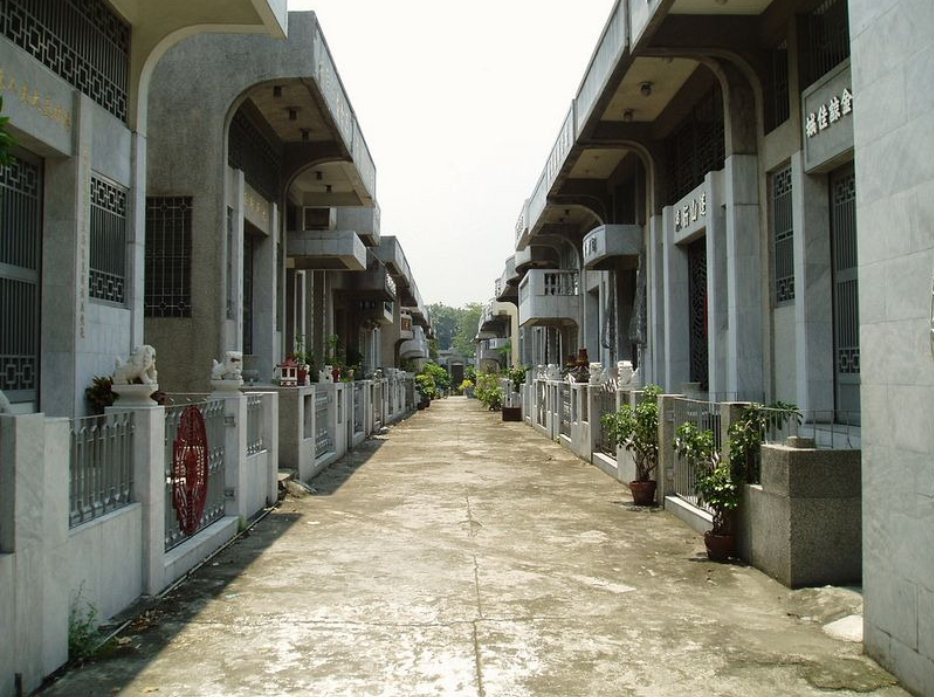
(Mausoleums in Manila Chinese Cemetery, Photo from Amusing Planet)
YOU CAN ALSO READ: Old but gold: Why the Manila Chinese Cemetery is still relevant
2. Lighting Candle: Blending Catholic and Chinese Beliefs
One thing unique about Chinoy culture is the influence of both Catholic beliefs and Chinese traditions. Most likely, Chinoys light candles to honor and remember their ancestors’ legacy. For some, they also believe that the flame guides the spirits back home to their families during All Souls’ Day.
By combining faith and heritage, Chinoys practice both Catholic customs, such as praying for the souls, and Chinese rituals like burning incense and lighting candles. This reflects how two cultures can harmoniously coexist in paying tribute to their departed loved ones.
This All Souls’ Day, it’s best to embrace and respect different traditions, just as we honor those who have passed on.
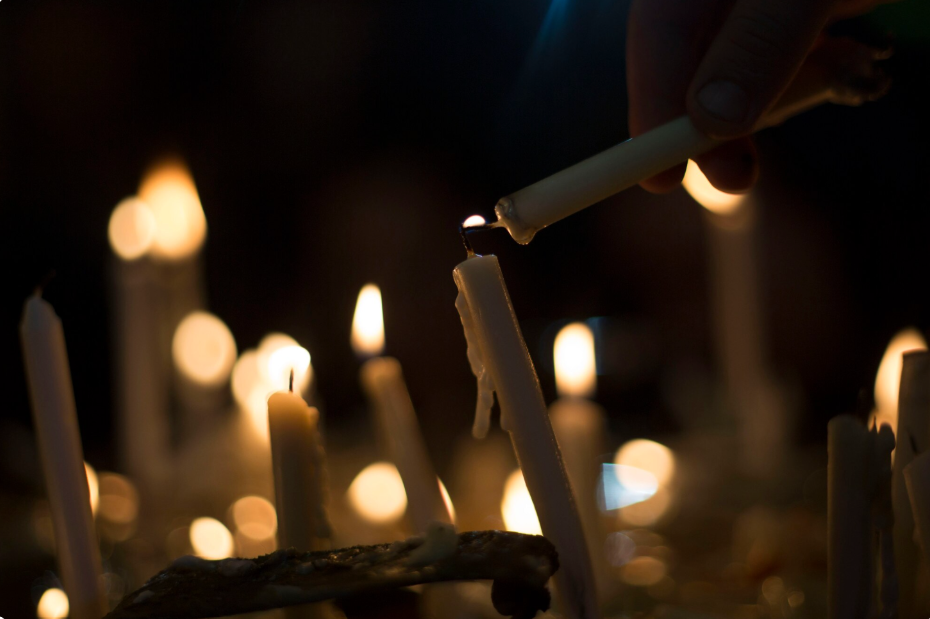
(Burning candles for the dead, Photo Credit Freepik)
3. Bringing Flowers: A Symbol of Undying Love
Regardless of one’s belief, bringing flowers to the departed souls is a symbol of our undying love for them. It’s a way to tell them, “We still remember and care for you.” Indeed, flowers go beyond religion, tradition, and even culture. Most people do this with the purest intention of love, believing that the souls of their loved ones deserve to be remembered.
That’s why many bring white flowers that symbolize purity, just like the soul. Some also say it represents the restoration of the deceased’s innocence. Nonetheless, Chinoys who continue bringing flowers during All Souls’ Day keep their ancestors’ memories alive—continuing their legacy as they carry on the journey of life.
As we bring them flowers, we keep the lessons alive through our memories of them—always staying within our hearts.
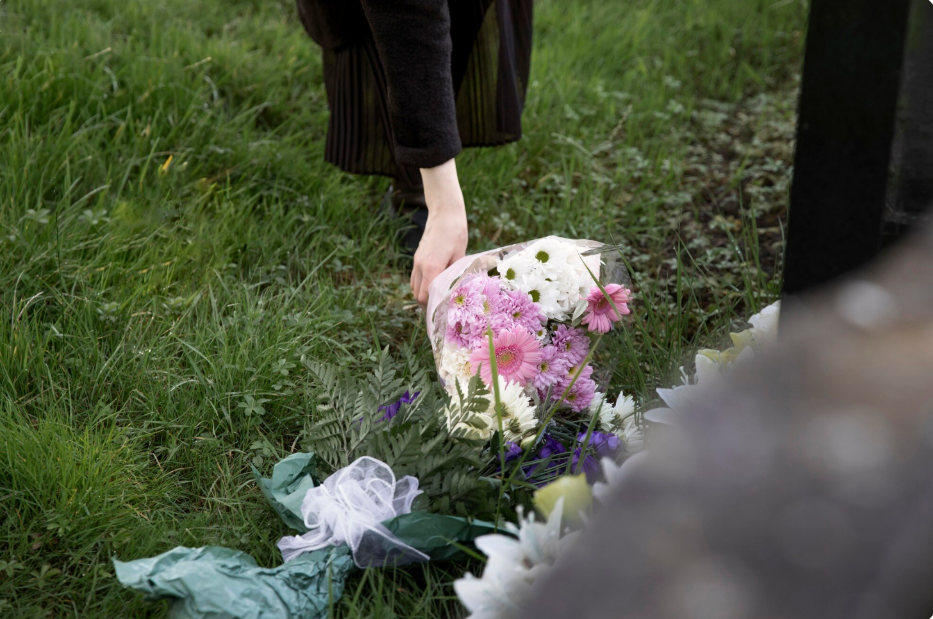
(Bringing flowers to the loved ones, Photo Credit Freepik)
4. Burning Incense Sticks: An Offering to Our Ancestors
Burning incense sticks, or 烧香 (shāo xiāng), truly represents Chinese tradition when paying respect to deceased loved ones. Most Chinoys continue to practice burning a pair of incense sticks even up to this day.
When you visit a Chinese cemetery, you’ll often see mausoleums or graves with smaller tomb headstones bearing the Chinese characters 后土 (hòu tǔ) within the premises. It is believed that leaving a pot of incense in front of this stone is a way to ask for protection and guidance from departed loved ones.
Lighting incense sticks based on color may also hold different meanings: yellow for the newly deceased who have passed away within the last two years, and red for those who have been gone for more than two years.
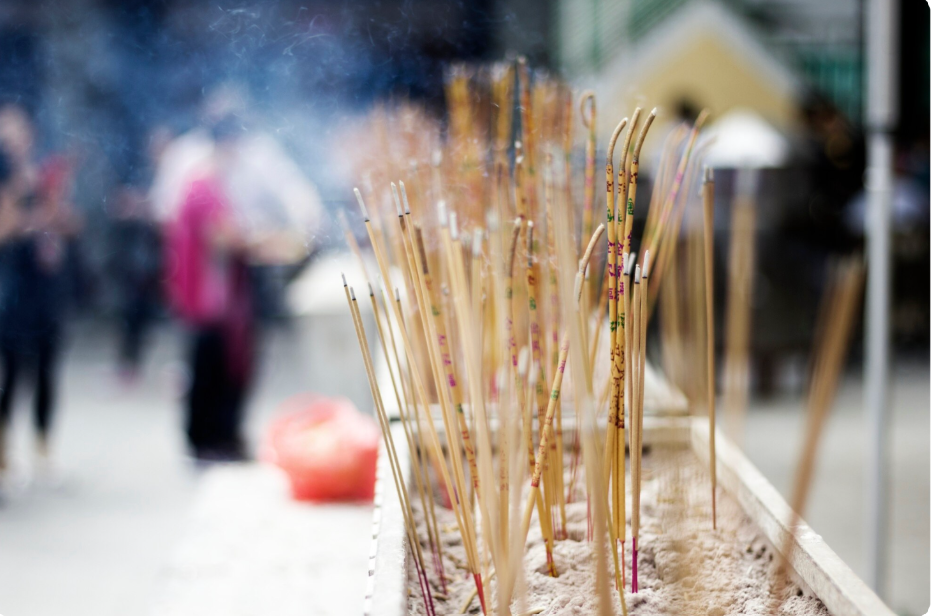
(Burning incense sticks for the deceased, Photo Credit Freepik)
5. Food Offerings: Lasting Ties with Our Ancestors
Food connects us with one another even with our departed loved ones. Whenever Chinoys visit a cemetery this All Soul’s Day, they often bring food offerings as a way to show their lasting ties with their ancestors.
Some even believe that food helps maintain a connection with their ancestors, as it ensures their well-being in the afterlife. Others also believe that souls still need sustenance, so family members bring their favorite dishes to symbolize their care and remembrance.
Finally, most people who follow this tradition believe that food can serve as a source of harmony between the living and the departed — preserving the bond with our ancestors.
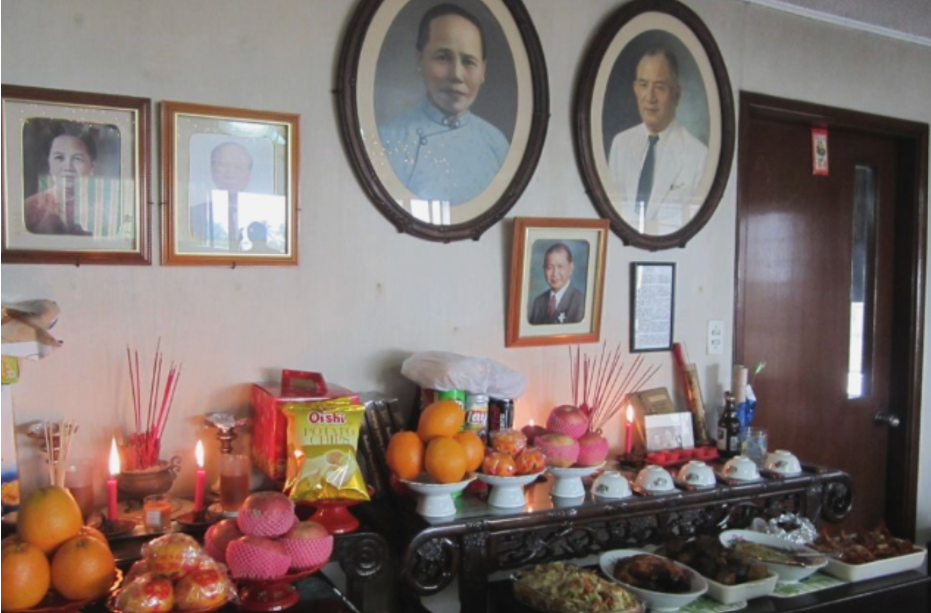
(Food offerings to the deceased loved ones, Photo from Pinterest)
6. Providing Comfort Through Burning Joss Paper
Joss paper or paper money is a common item you bring when visiting a Chinese cemetery because Chinoys usually burn it for their deceased loved ones to enjoy fortune in the afterlife. They also believe the departed need food, shelter, and money in the spirit world, just like how the living do.
At the core of this practice, believers do it to provide comfort to the people they love — even if they are no longer here, they still give their love in the form of offerings during All Souls’ Day.
There are also three types of Joss paper:
- 刈金 (Yìjīn) – features a gold metallic rectangle at the center and is burned for relatives who have passed away for more than three years.
- 小银 (Xiǎoyīn) – features a silver metallic rectangle at the center and is burned for recently deceased relatives who have passed away within the last three years.
- 寿金 (Shòujīn) – this type of joss paper has a gold metallic rectangle with printed characters at the center. It is offered to Tohti Kong (as pronounced in Hokkien), or 土地公 (Tǔdì Gōng), the God of the Earth, as well as to other gods and deities.
READ MORE: All Saints’ Day: 6 Chinoy traditions for respecting the dead
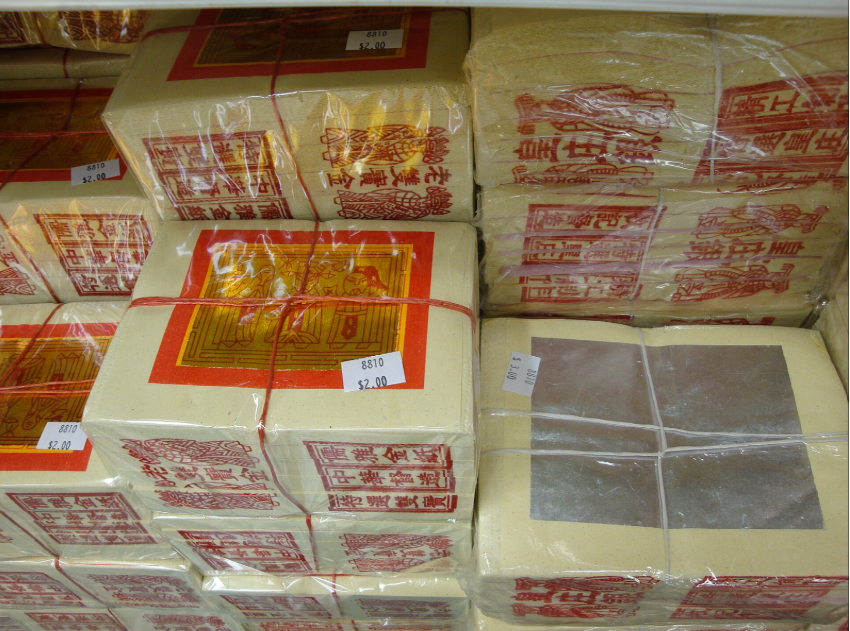
(Joss paper, Photo from Wikipedia)
7. Colored Paper Onto Tombs: A Mark of Remembrance
As you stroll through the Manila Chinese Cemetery, you will probably see tombs adorned with colored paper. Some Chinoy families paste colored paper or 五色纸 (wǔsè zhǐ) as a mark of respect and remembrance for their departed loved ones. It’s their way of saying, “We still remember you, and we still care.”
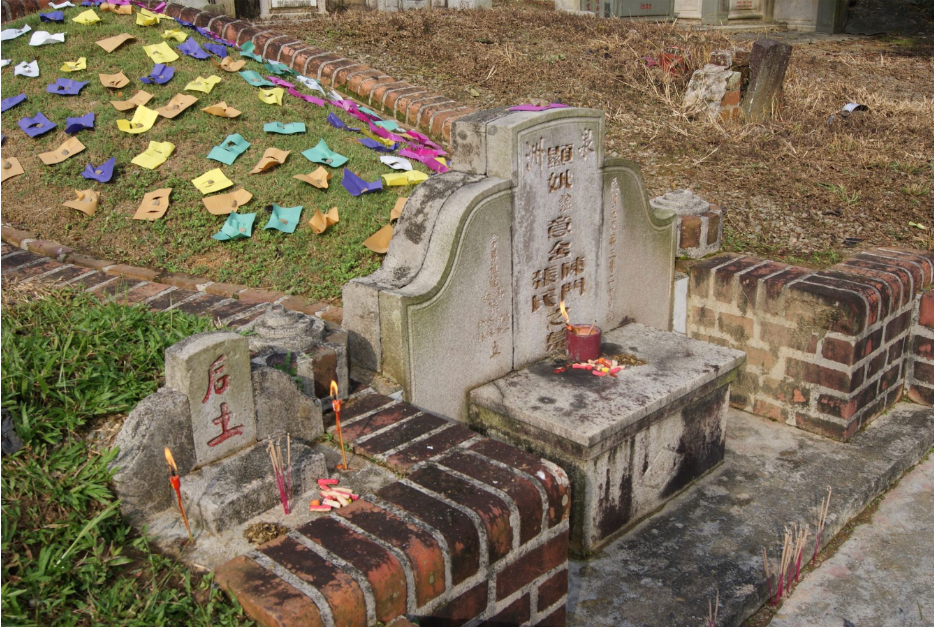
(Sticking colored paper on a tomb, Photo from Baidu)
As part of Chinoy traditions, these colored papers are also believed to protect the tomb from bad spirits, with bright colors—usually red, yellow, or gold—serving as symbols of protection. Sticking colored paper further represents renewal and cleansing, as family members usually clean the tomb first before placing them.
For some Chinese families, they also do this during the Qing Ming Festival or Tomb Sweeping Day every April as a time of reflection for honoring their ancestors.
Regardless if it’s All Souls’ Day or Qing Ming Festival, we can say that colored papers are more than just decorations; they also stand as symbols of remembrance, cleansing, and renewal.
Remember that whenever we practice our ancestral traditions, we will always keep the memories of our ancestors alive. It’s also our way of telling them that they will always remain in our hearts and minds as we continue to honor their legacy.
About the Author
