Come Along for Eight Days in Bhutan
A journal of mountain trails, monastery visits, and moments of stillness in the Land of the Thunder Dragon
There’s a moment on the trail to Tiger’s Nest Monastery — somewhere past the second teahouse, thighs screaming, rain starting to needle down — when you stop asking, “Why did I sign up for this?” and start asking something closer to “What am I actually looking for?” That question followed me through all eight days in Bhutan, a kingdom that measures its wealth in Gross National Happiness and still keeps 70% of its land under forest cover by constitutional mandate. This is the story of what I found.
This trip’s visa arrangements, itinerary, and accommodations were handled by Breathe Bhutan — Bhutan requires all tourists to book through a licensed local operator, which made the logistics seamless from Manila to Paro and back.
Day 1 — Landing in the Thunder Dragon Kingdom
Paro’s airport is famously one of the hardest in the world to land at — flanked by mountains, no autopilot allowed — and our Drukair pilot earned every bit of that reputation. There was rainy weather, a hard landing, and a pilot who narrated his approach not once but several times over the intercom, calm and professional, talking a cabin full of nervous passengers down safely. It should have been terrifying. Instead, it was oddly comforting.
(Pro tip: request a physical stamp in your passport on arrival — even if you’re routed through the e-gates, it’s easy to miss and worth asking for. Try to reserve a seat on the left side when landing for the descent into the valley, and on the right side when flying out for the majestic view on departure. And grab an unlimited local SIM at the airport; it’s cheaper than an eSIM. Wi-Fi is also scarce once you’re out in the countryside.)
Our first stop was Dochula Pass, its 108 chortens wrapped in fog, followed by Chimmi Lhakhang — the “Divine Madman’s” temple, famous (and slightly scandalous) for its founder’s unconventional teachings and the phallic symbols painted on houses nearby, said to ward off evil and bring fertility.
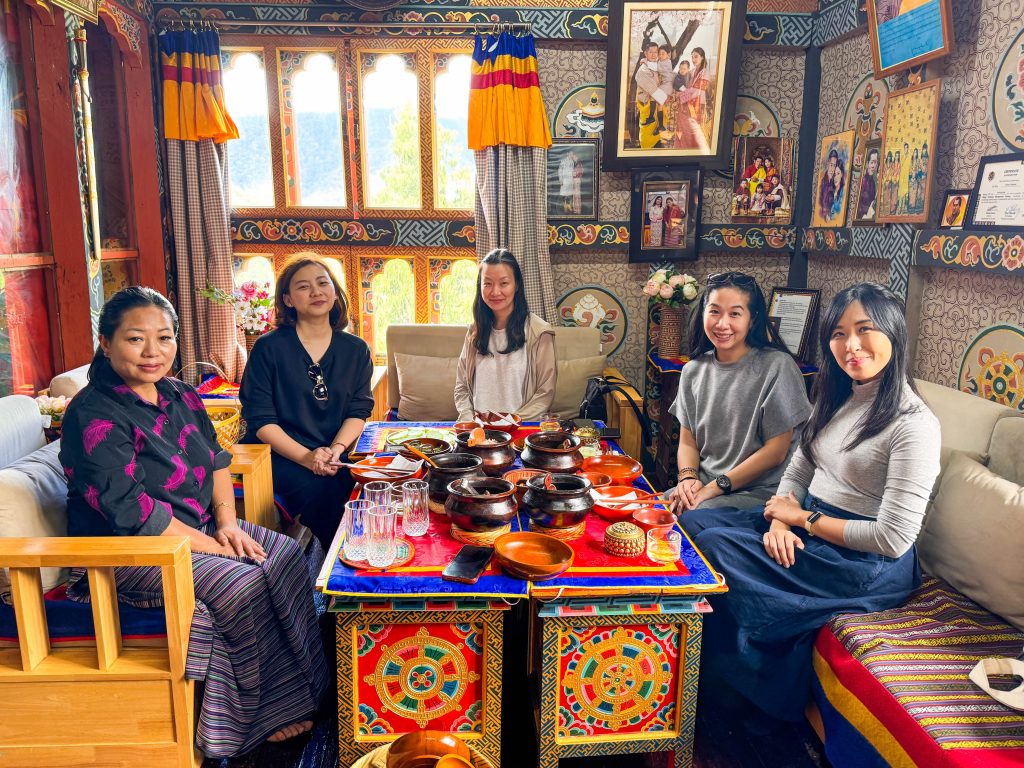
Lunch at Aum Toeb Zam, a homestay, set the tone for the whole trip: cheese in absolutely everything, served by a host so gracious it bordered on humbling. Dinner was Bhutan’s national dish, ema datshi, at Ama Om’s Farmhouse. The cheese, the butter tea, the white ceremonial cloth laid out for us on arrival — that’s a welcome you don’t forget.
Day 2 — Fortresses, Bridges, and a Very Long Soak
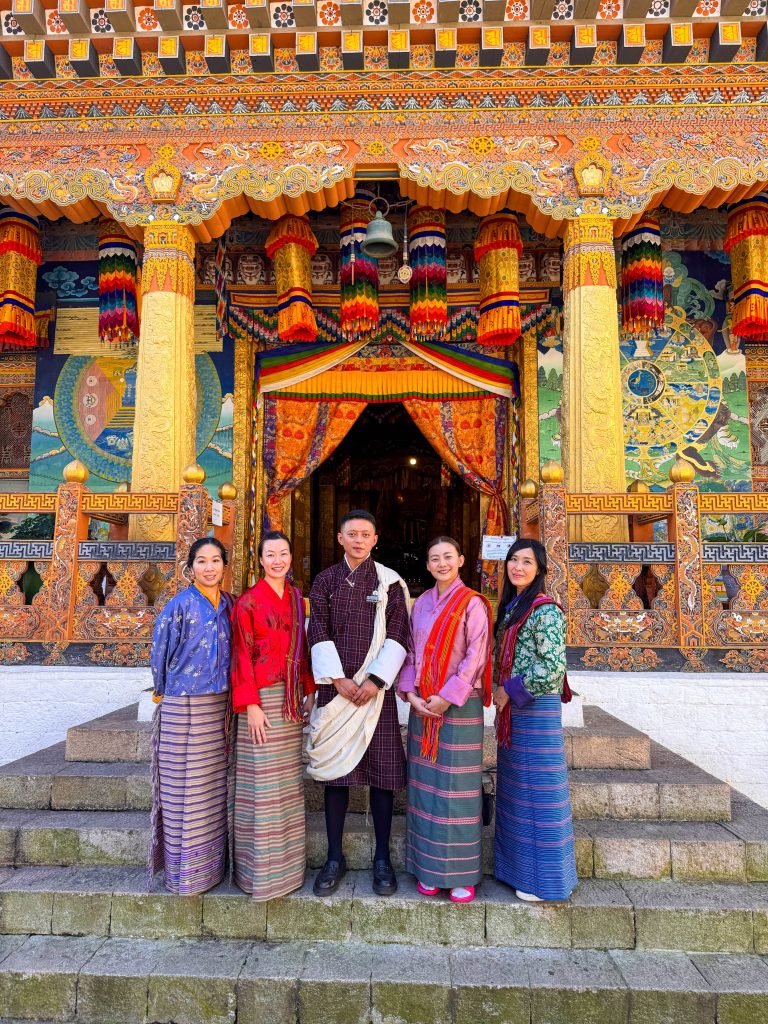
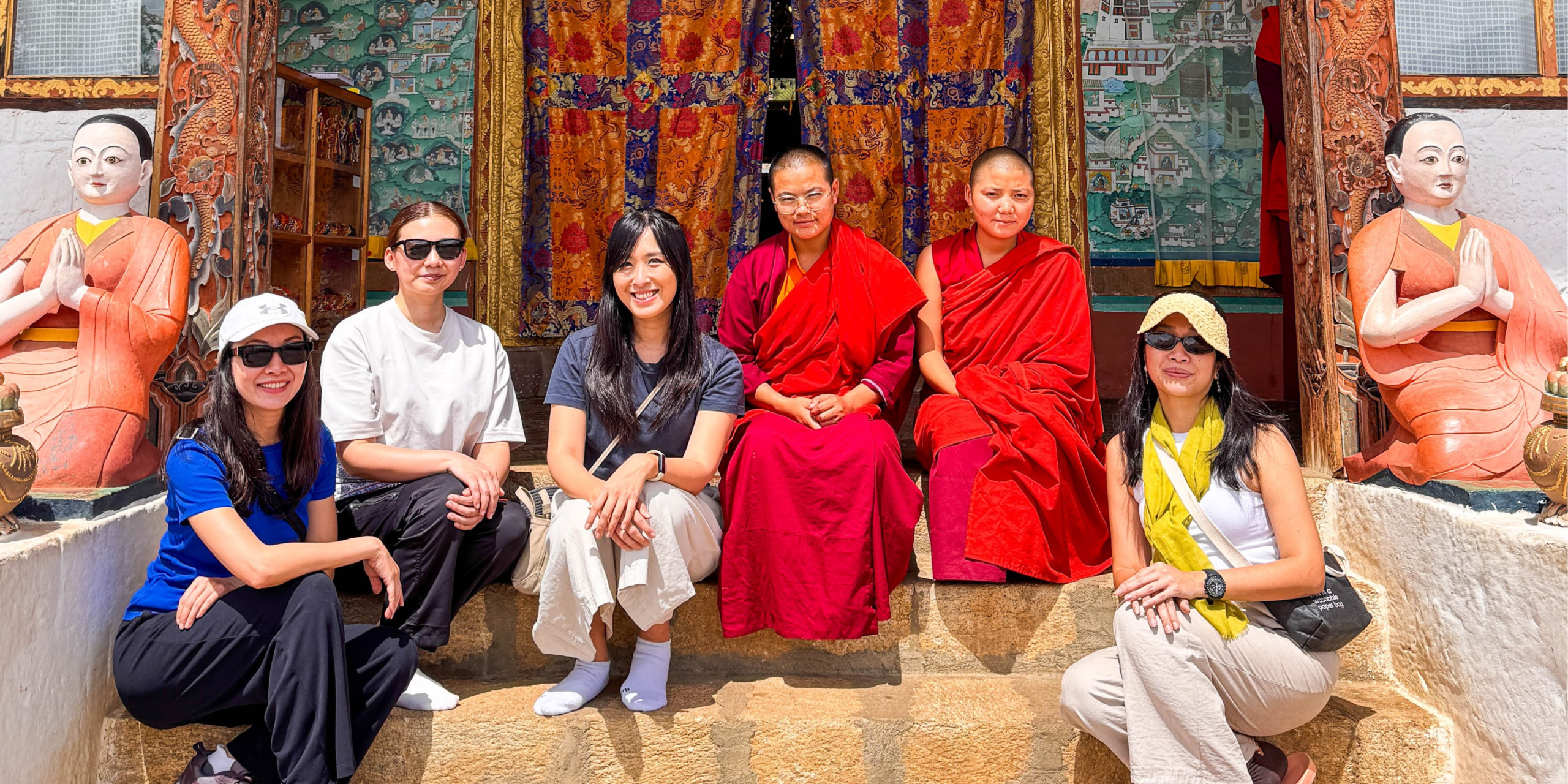
Punakha Dzong — the Palace of Great Bliss — is where Bhutan’s spiritual and administrative power still physically meet, a central utse tower standing between the monastic body and the government body it was built to balance. We each wore a kira — the official dress for women in Bhutan — for the visit and felt something close to reverence: for the deities housed inside, for a culture where respect for tradition isn’t performative; it’s just how people live.
Then came Khamsum Yulley Namgyal Chorten — “the victory over the three realms” — a two-kilometer hike that was moderate but strangely peaceful, made better by a stray dog who adopted us as an escort for the whole way down. A Buddha sits at peace on the top floor, with a sweeping view of the city. The day closed with cocktails at Six Senses Punakha, then a hot stone bath back at the farmhouse, local Ser Bhum beer, and a taste of ara, the local spirit.
Day 3 — The Long Drive to Gangtey
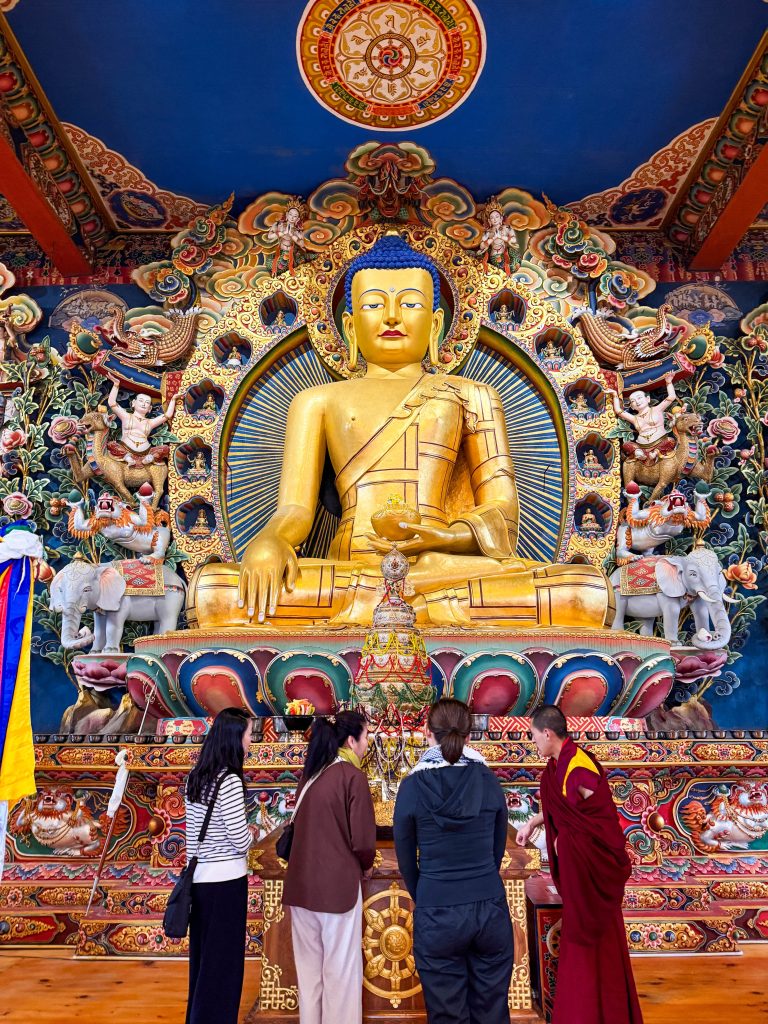
Rain cancelled the planned hike, so the day became a lesson in Bhutan’s other constant: the drive. Two to three hours at a stretch, no phone signal, nothing to do but watch cows wander the road and let the landscape do the talking. It’s the kind of forced stillness you don’t get much at home.
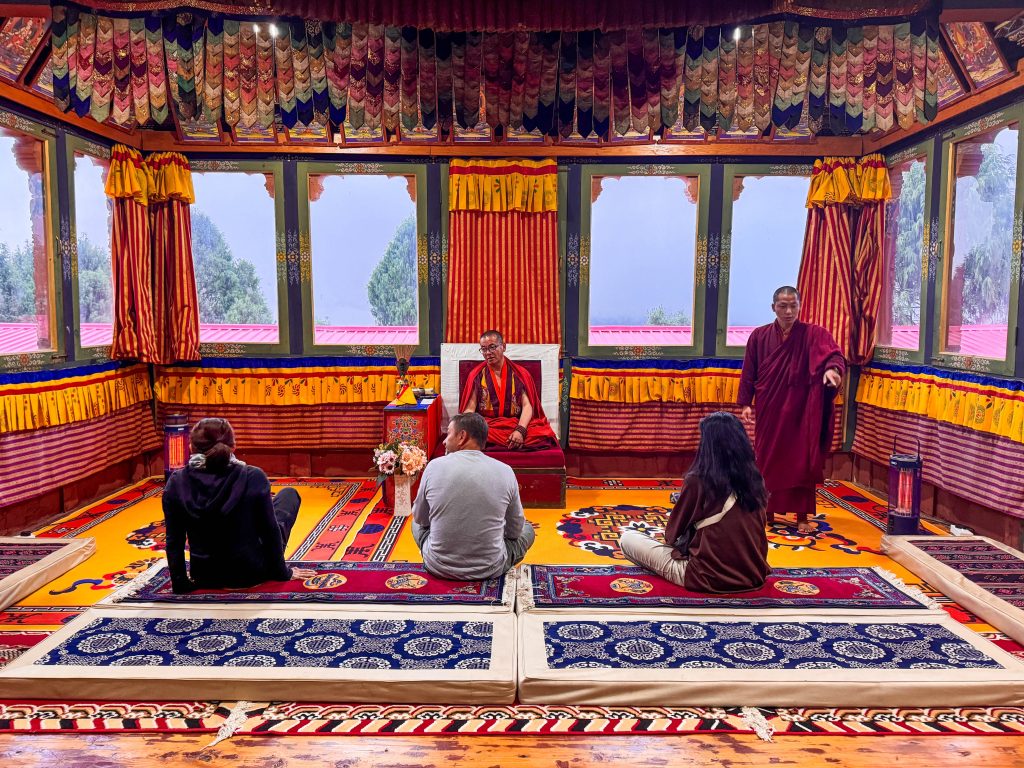
We reached Gangtey Shedra by evening — a monastery founded, our guide explained, by the grandson of the site’s original treasure-builder, teaching the Nyingma lineage of Tibetan Buddhism, now nine reincarnations deep. Butter lamps, monks chanting themselves to sleep somewhere nearby. It raised a question I kept turning over: the monks are people too — if they could choose any life, what would they choose?
We closed the evening with a guided meditation session, easing into a bodhicitta state of compassion — a deliberate counter to whatever negative forces the day, or the world, might be carrying.
Day 4 — Valleys, Cranes, and a Cooking Lesson
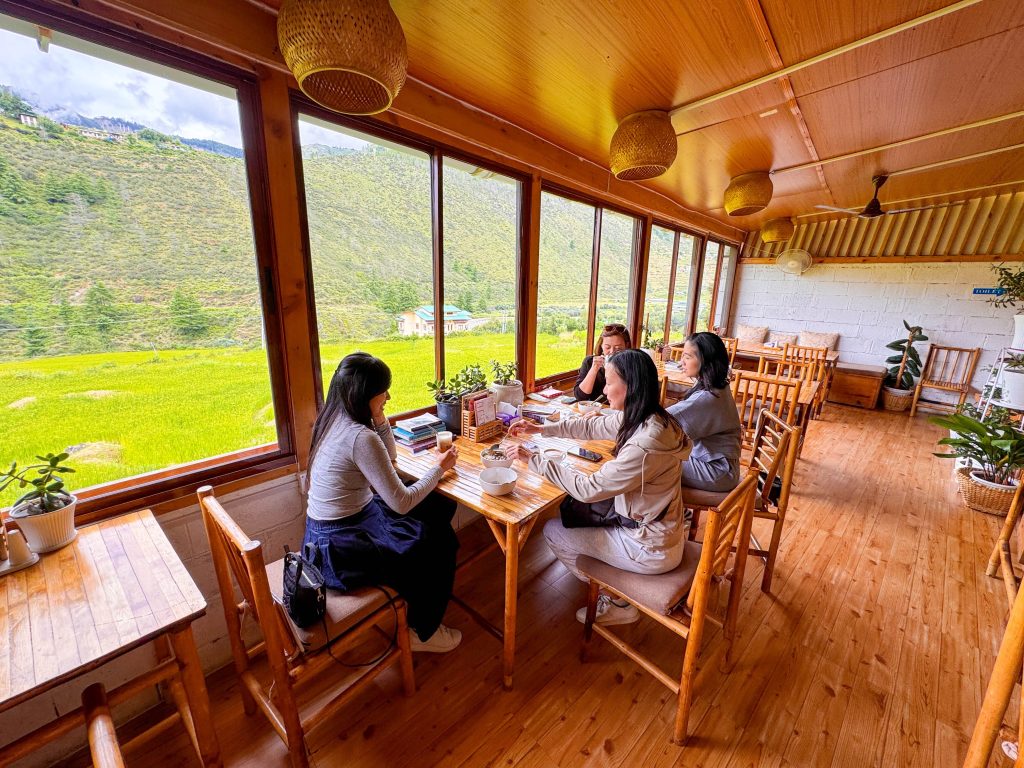
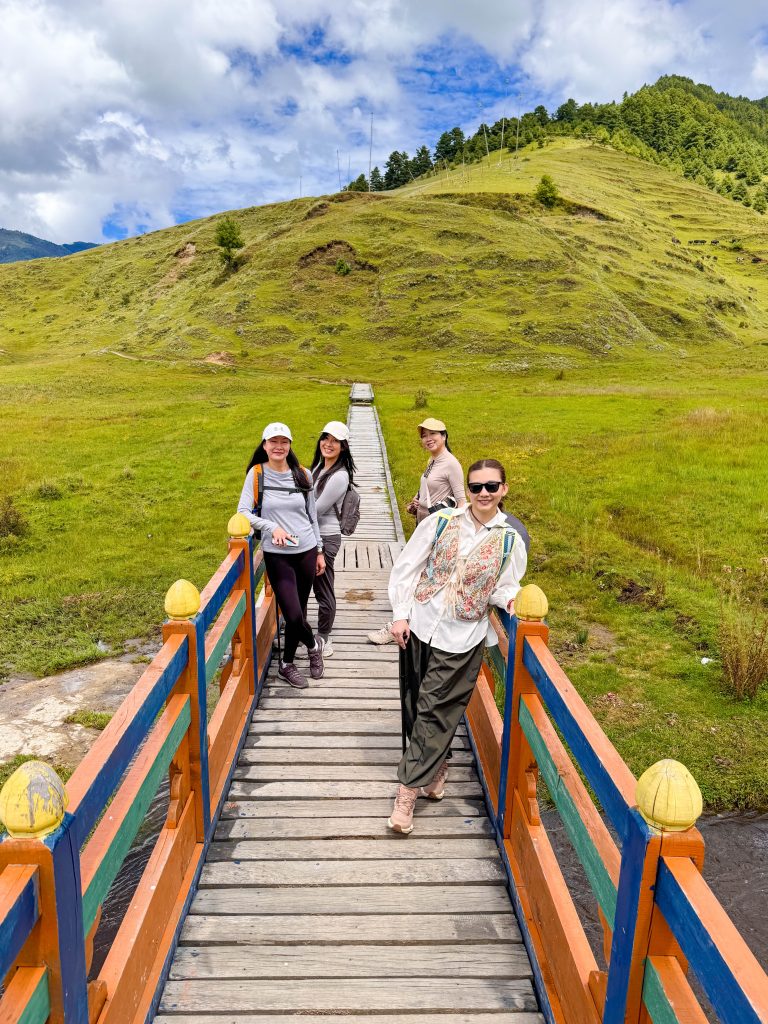
We took an easy nature hike through Phobjikha Valley, appreciating its sweeping, spectacular views, with cows grazing along the way. Then came the Black-Necked Crane Center: these are the “birds of heaven,” vulnerable but with a population slowly recovering — thanks in large part to Bhutan’s conservation efforts.
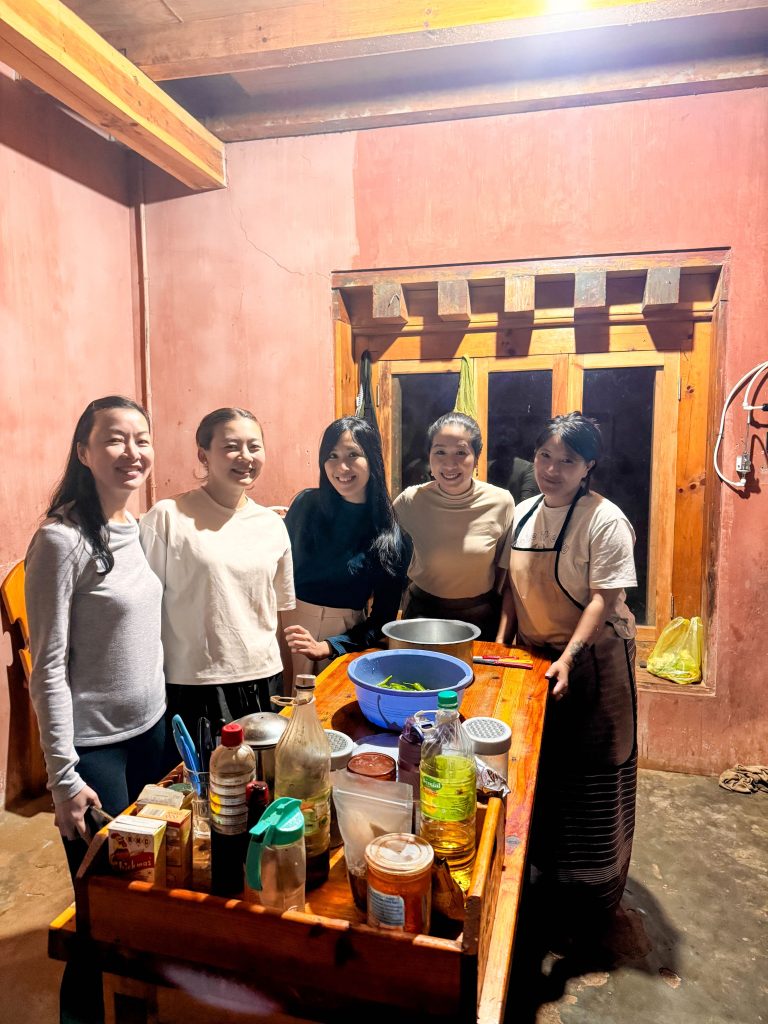
The afternoon slowed all the way down at Gaseleo Eco Lodge — genuinely simple, no frills — where the owner’s sister taught us to cook ema datshi, chilies and cheese coming together under her patient hands.
Day 5 — Thimphu, and a Conversation About Home
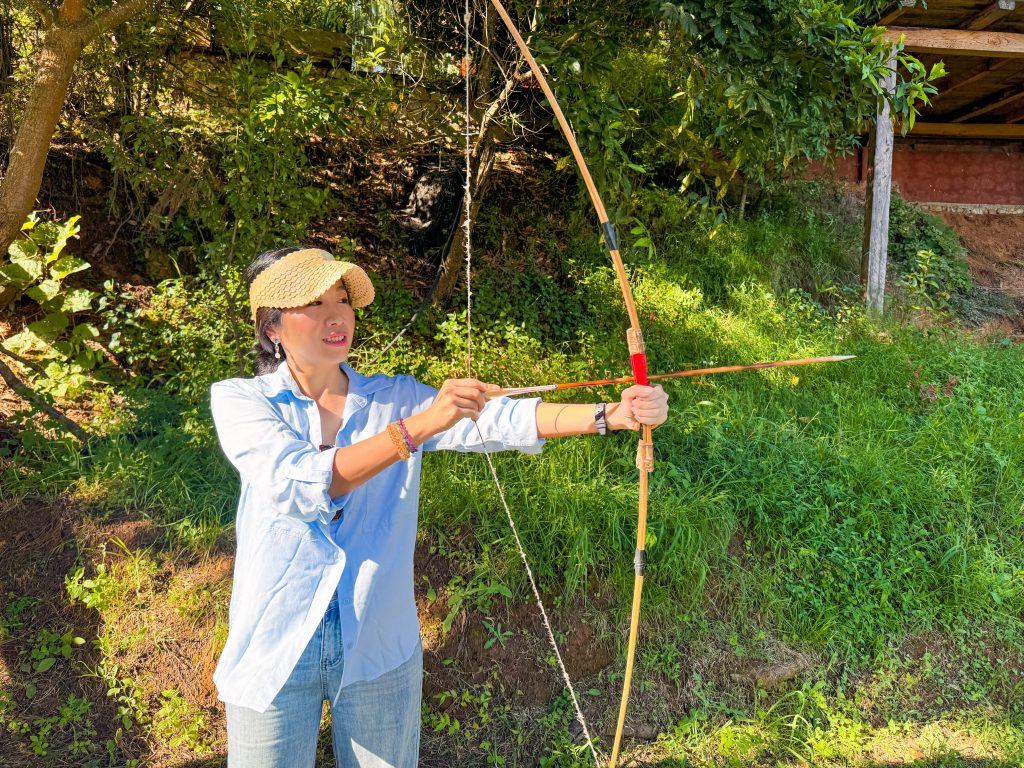
Early in the morning, we tried archery, Bhutan’s national sport, with singing and dancing alongside our guide, Kinga. We drove four hours to the town of Thimphu, checked into The Pema, and had a very good lunch with Ugyen Rinzin — the father-in-law of our travel agency’s owner. He told us real stories about loving his country enough to give back to it — the kind of quiet patriotism that comes from a place that genuinely protects its land and listens to what its people need.
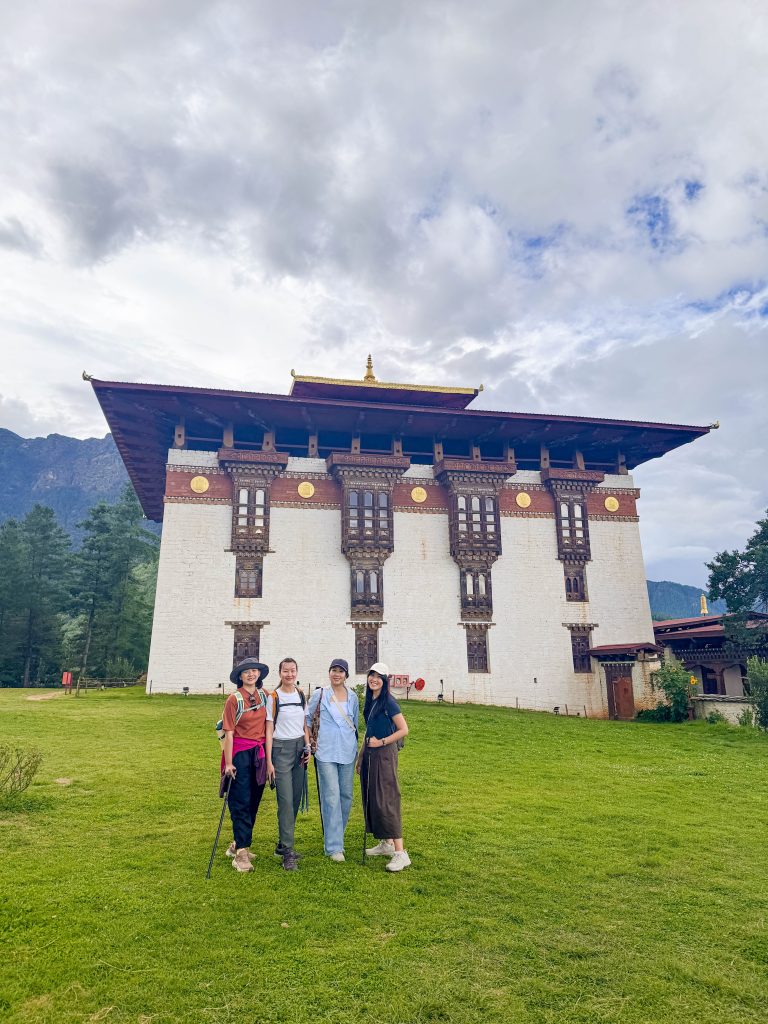
Later came a rain-shortened Wangditse hike (we didn’t make it inside the monastery — the sky had other plans) and a quick stop at the takin conservation area, where the national animal and other native species roam without cages.
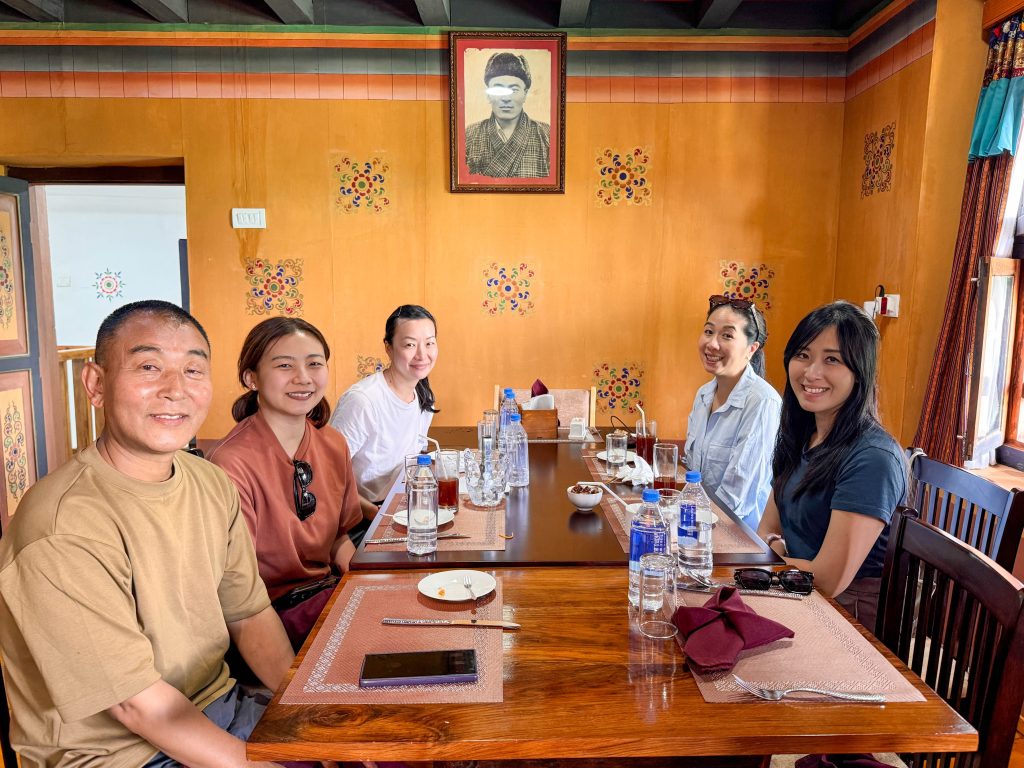
Dinner was Indian thali at Le Méridien with local Filipino friends Lingling and Mike. We finished with a nightcap of K5 whisky at Druk Hotel, enjoying local hospitality and companionship.
Day 6 — Textiles, Trades, and a Good Buffet
The Royal Textile Academy — a structure as beautiful as the exhibits it houses — walked us through modern Bhutan’s history: five kings and its careful diplomatic dance with India and the UN. Shopping followed at DSP (a jacket, a kira), and we happened upon a graduation ceremony for the eighth cohort of young Bhutanese completing compulsory upskilling and job placement training.
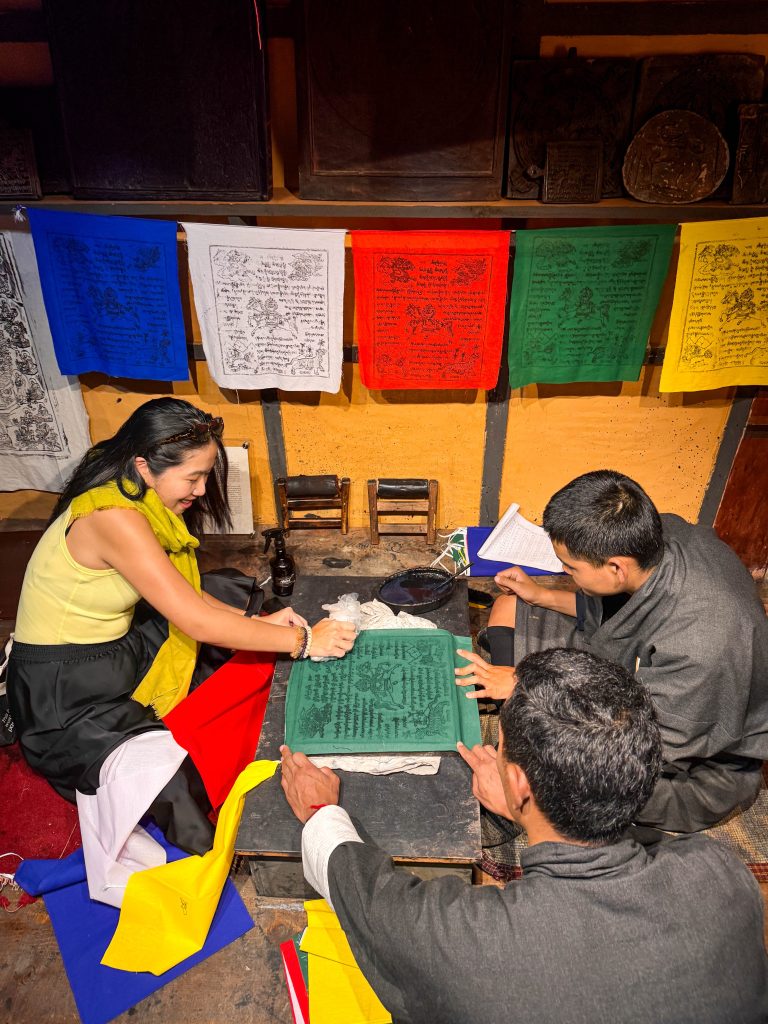
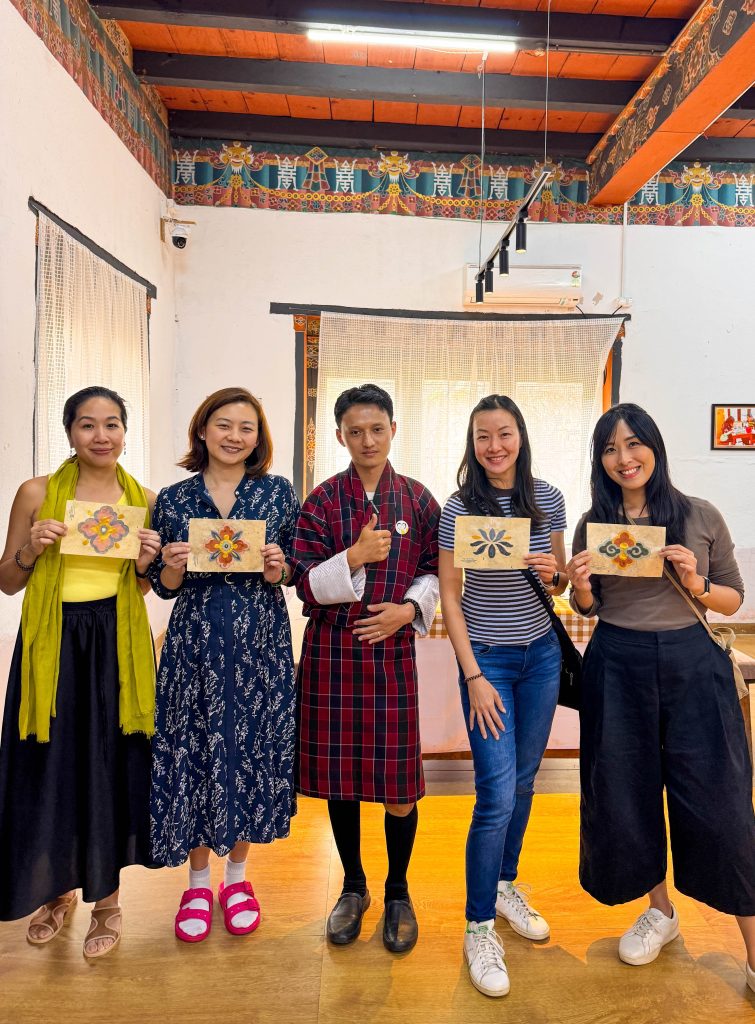
At the Arts & Crafts School, we tried our hand at prayer-flag painting, fresh butter tea preparation, watercolor painting, and wood carving — hands-on activities that, to my eye, were a reminder of how much opportunity here still centers on traditional trades, government service, and monastic life.
We checked into Tiger’s Nest Camp — genuinely luxurious glamping, with earplugs included, a resident dog named Simba, and gorgeous views of the monastery. Dinner was an Indian buffet at Taj Paro — a comforting meal, paired with a good cocktail, in a beautiful hotel.
Day 7 — Tiger’s Nest
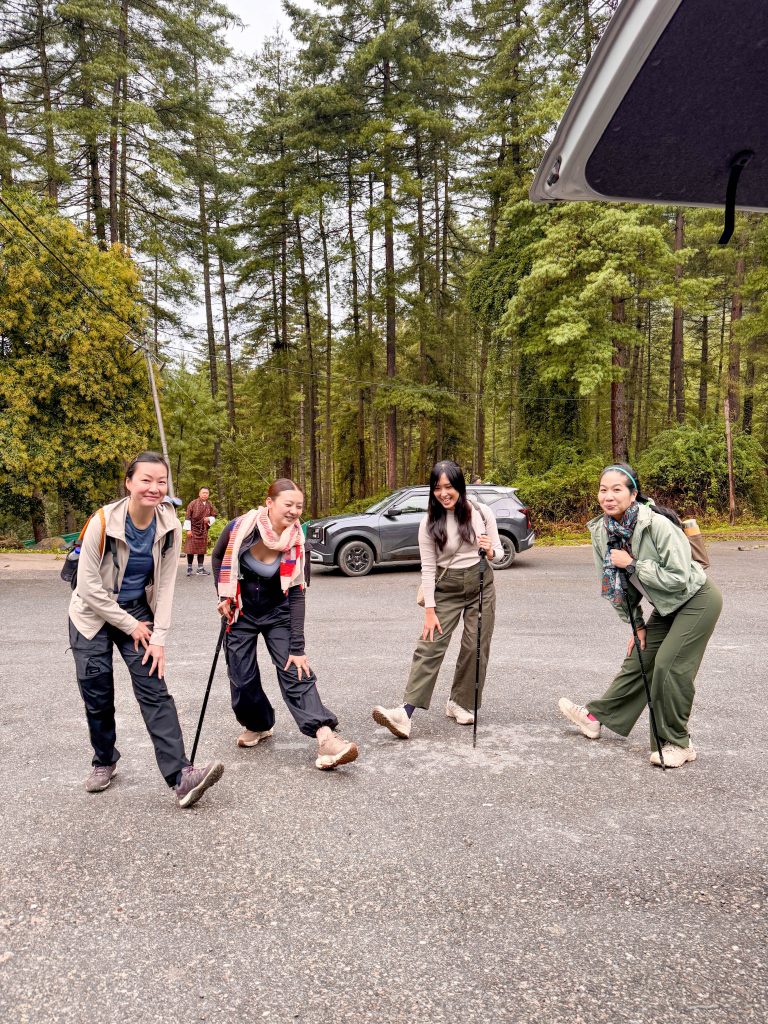
The big one. Oatmeal and coffee for fuel, hiking poles, extra snacks, good wet-weather shoes, electrolytes in the water bottle. The first hour is the hardest — a steep, warming incline (there’s a horse option if you want it) up to a café stop, then a gentler, flat stretch to the viewpoint. Tea break, photos, and then the part nobody warns you enough about: 700 steep steps down into the gorge and back up into the monastery itself, brutal on the thighs either way.
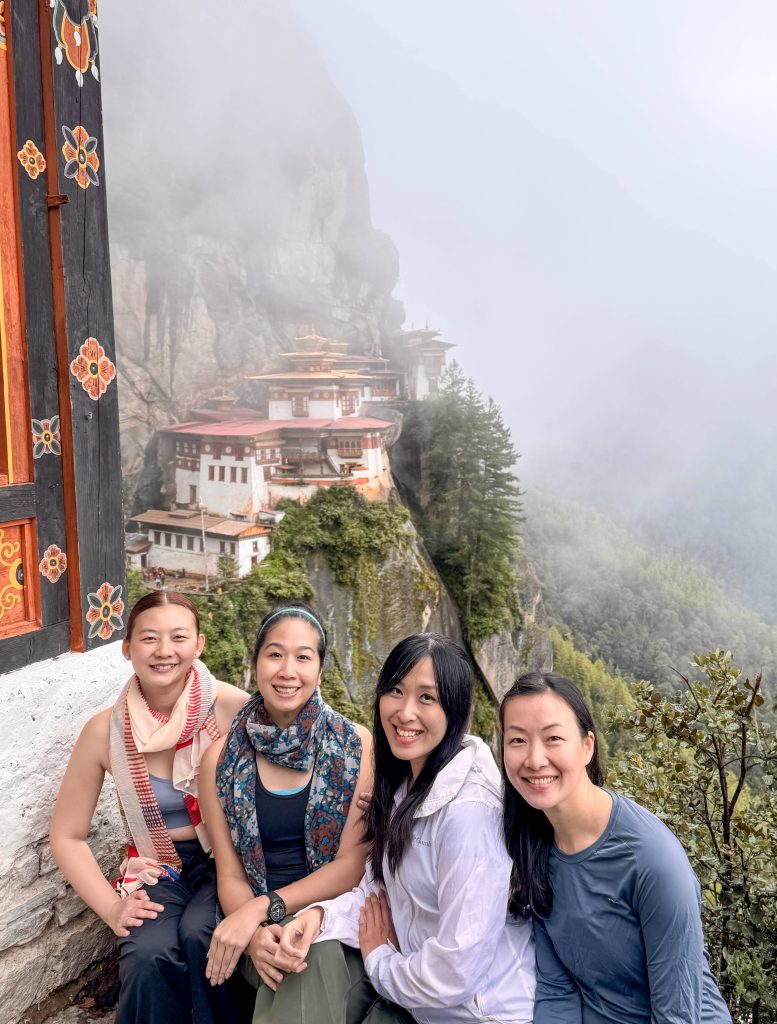
Phones and bags stay in lockers before you go in. Inside: a shrine to Guru Dorje Drolo — the wrathful manifestation of Guru Rinpoche to whom Tiger’s Nest is dedicated — carved into the same wrathful rock face; a cave; a second shrine housing the only statue said to have survived the 1998 fire untouched; and a third and fourth chamber tied to the legend of Dorje Drolo and the ritual dagger — the phurba — he used to subdue evil spirits at the site. The rain started on the way down, turning the descent into a solid two nonstop hours.
Recovery was its own ritual: a rustic, heartwarming hot stone bath at Kinga’s mother’s house — water heated by actual hot stones, herbs floating on the surface — followed by fresh milk and toasted rice, shared with her kids, her wife, and her mother.
We checked into Amba Paro that night — 36 spacious villas across five blocks, with room 202 among those offering a direct Tiger’s Nest view. Dinner was a decadent à la carte meal with a good glass of Merlot, and the spa’s dry sauna and steam room did more for my legs than anything else on the trip.
Day 8 — Coffee, Culture, and Coming Home
A misty last morning: coffee on the balcony, a properly excellent breakfast spread, and a send-off that felt more emotional than expected.
The National Museum of Bhutan held a lot: centuries-old artifacts, intricate textiles, Buddhist scrolls, and taxidermy displays alongside scenes of daily life — a quiet, layered introduction to Bhutan’s past and present, chronicling everything we’d already glimpsed out in the valleys and monasteries.
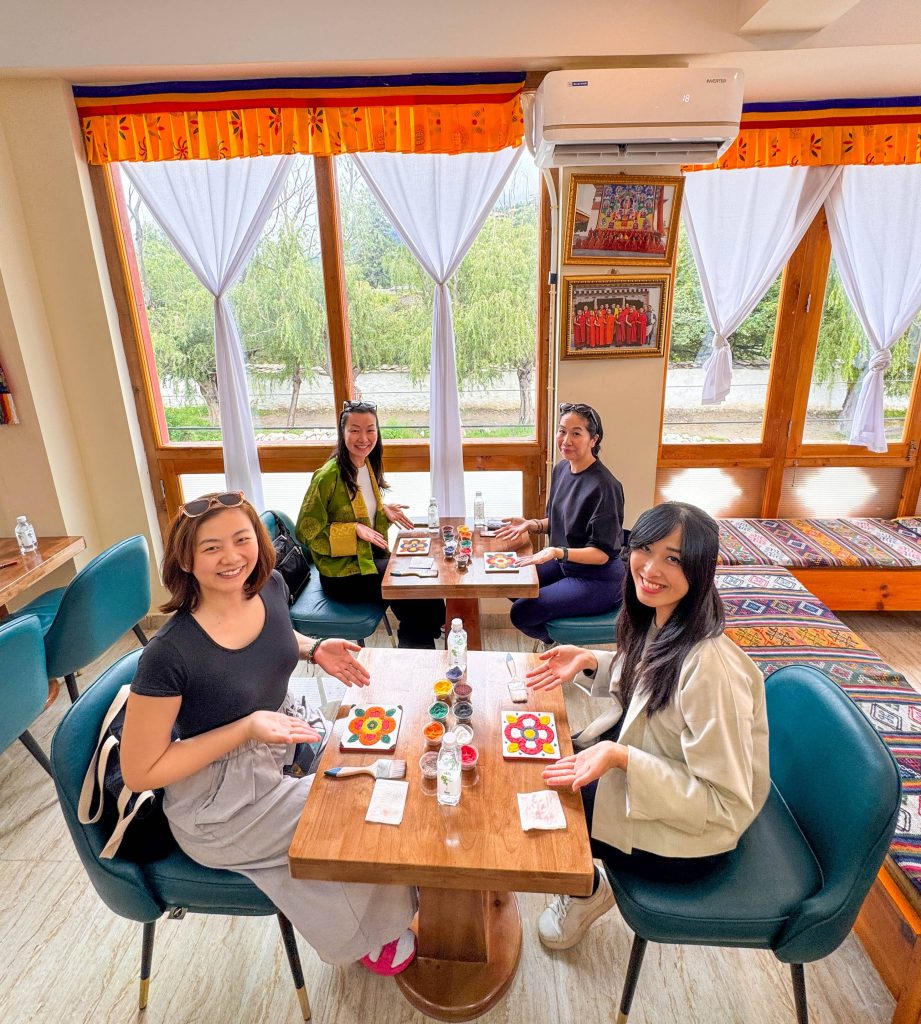
Then, therapy of a different kind: thirty minutes of sand mandala art at Paro’s Sand Mandala Display Center, painstaking and quiet, ending — as it’s designed to — with the whole intricate thing being brushed away. Nothing in life is permanent. We’re all just getting ready to go home and be back with our families.
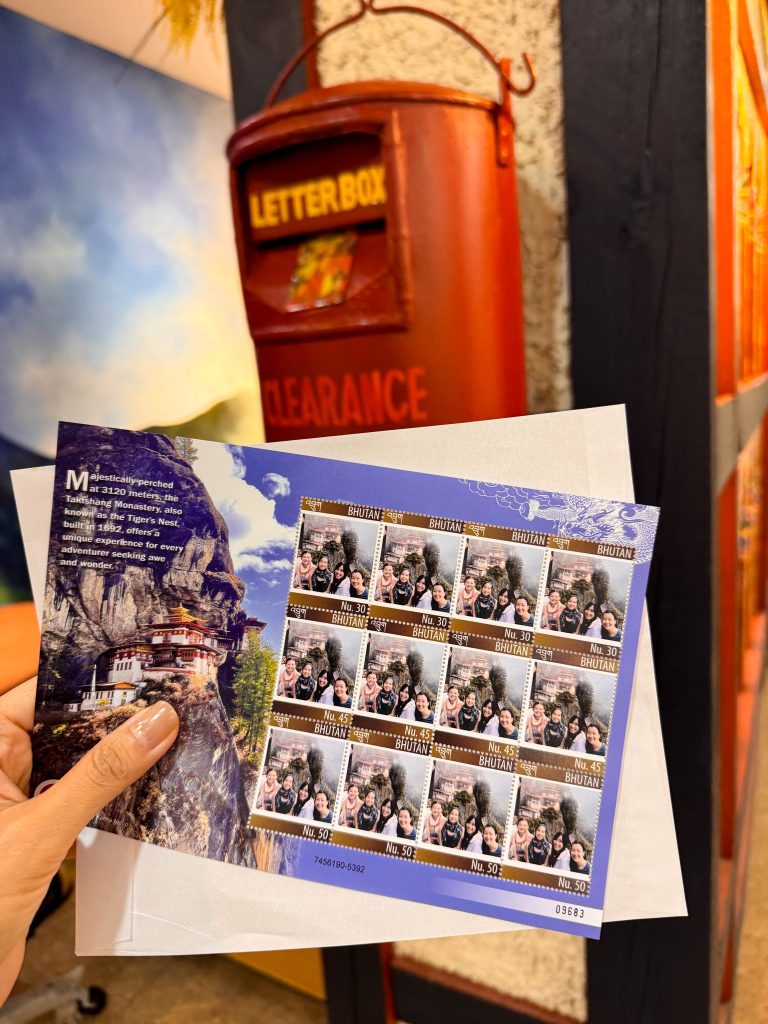
A last stroll through Paro’s old town, a farewell lunch, and off to the airport — which, in true only-in-Bhutan fashion, sells everything from books and honey to chocolate and its own printed postage stamps. We gave our guides, Dawa and Kinga, an extra tip on the way out — they’d earned it many times over.
What I’m Taking Home
Bhutan asks something of you that most trips don’t: courage to step outside your comfort zone and patience to let a place work on you slowly. Somewhere between the mountain roads, the cow herders, the monks who are just normal people, and the family who opened their hot stone bath to strangers, I remembered what routine and busyness quietly steal from you — the ability to notice what matters.
This is a tiny, landlocked kingdom next to giants, one that has chosen to develop on its own terms and protect what makes it distinct while still finding its place in the 21st century. I’m genuinely curious to watch how that unfolds. And I’m walking away from these eight days with something more personal: lessons from the people I met and the friends I traveled with that I hope will make me a better traveler, wife, mother, and steward of what’s been given to me. Bhutan is now in our hearts as well.